

—Jacob Siegel, the Information State, excerpts from audiobook, which can be found here.
Totalitarianism came to America slowly at first and then all at once. It began as a utopia, one I helped build. It seemed like a perfect new America and gave all of us godless creatures, who’d been chewed up and spit out by the Boomers’ counterculture revolution, a collective sense of purpose. It was all going so great until it wasn’t.
A Virtual Utopia
I got online 30 years ago. I never planned on living half of my life on the internet. It just turned out that way. I had motive, means, and opportunity to kill off my real-life self and be reborn in the virtual world. Why wouldn’t I escape a life that had become a full-spectrum failure at everything I tried to do? A relationship that blew up when the man I thought loved me went back to his wife, the Graduate Film Program at Columbia I’d targeted as my life’s dream ended in one semester as I chased that loser guy back to LA.
There are things about that moment that are too painful to write about, at least for now, but I will someday. The result was me staring at the wall with nothing achieved and nowhere to go. I had just turned 30.
The internet allowed me to remake myself as someone else. I could be strong. I could be confident. I could be beautiful because who knew what you looked like? I could just use words, and I was good at words. So I dove into a life online full of excitement and wonder, a dreamscape of endless possibilities. There was no Amazon, no eBay, no Google. There was barely a web browser.
I fell in love with an Italian I met online and came back from Italy pregnant. He didn’t want to be a father, but I wanted to be a mother, so I had my baby, and then I built a website so I could stay home with her and support us.

I was the success story for every progressive female: a single mom and a business owner. A daughter of feminism en route to helping launch the Great Feminization and the Great Awokening.
I was in Italy when I sent my first Tweet from my Treo. When Barack Obama signed on, I followed him, and he followed me. Then I became part of his army of clicktivists, shaping the new rules and building our desired narratives. We felt omnipotent.
This was the internet, after all, and you could be anything you wanted to be - an activist for moral good? Check. An outspoken exhibitist? Check. West Wing-like politicos acting like experts in politics? Check. Remaking a new America one social media post at a time? Check. Virtue signaling with images blasted out to followers displaying our goodness? Check.
For all the ways we used the internet, it shouldn’t be that surprising that we built a virtual America - a fantasy utopia - that we forgot wasn’t real. We were riding high with our media stars like Jon Stewart and Rachel Maddow. We were the new, the progressive, the forward thinkers, the early adopters. We colonized the internet in our image.
Utopias only have two paths forward. They either collapse or they must become more totalitarian out of necessity, to quote Milan Kundera in The Book of Laughter and Forgetting.
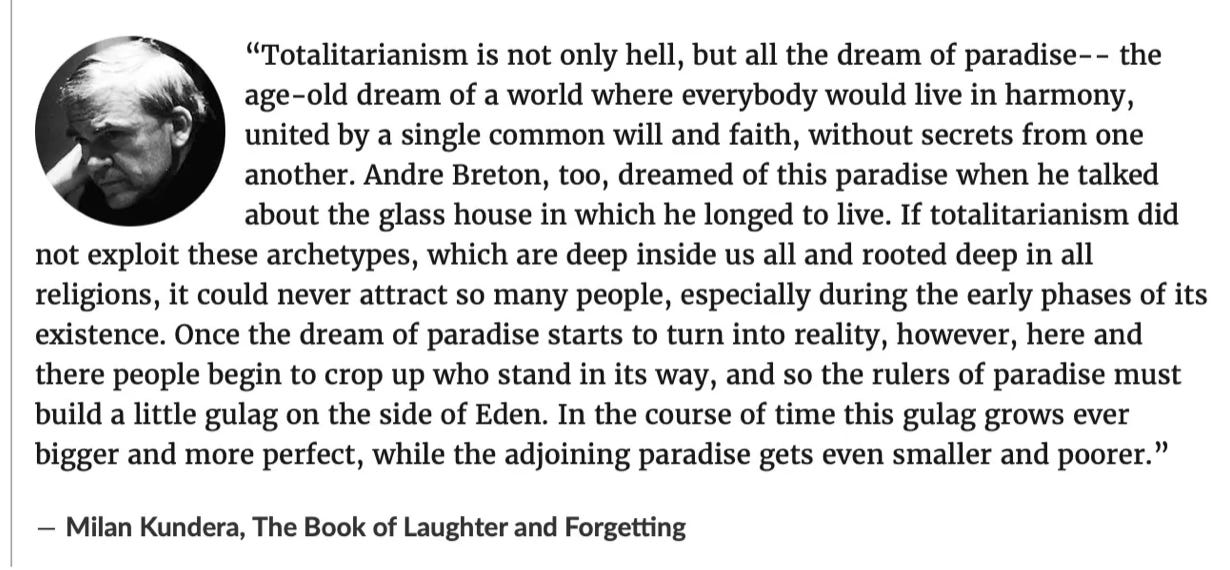
Our utopia was opt-in at first, and who wouldn’t want to be a part of it? For a time, it felt like the best thing ever, all of our problems solved. It was everything, everywhere, all at once. A “whole of society” effort. It was # OscarsSoWhite. It was Critical Race Theory. It was every institution, corporation, legacy media outlet, and movie studio.
But it was also dull. Movies became infused with dogma. The rules became stifling. Sooner or later, people like me were going to shake the tree.
Says Siegel:
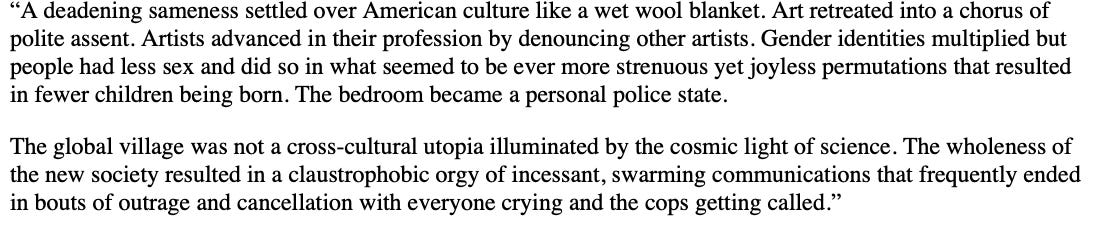
Maintaining utopia, let alone defining it, meant that there would eventually be people like me who asked too many questions, who would be hurled before the almighty panopticon — an army of puritanical scolds policing thought and speech — and eventually destroyed and purged as the mob cheered.
The Breakdown
I’d been a good liberal, a loyal and devoted Democrat all of my adult life. I’d never thought about conspiracy theories. I didn’t really challenge the system. I never doubted the intent of our government.
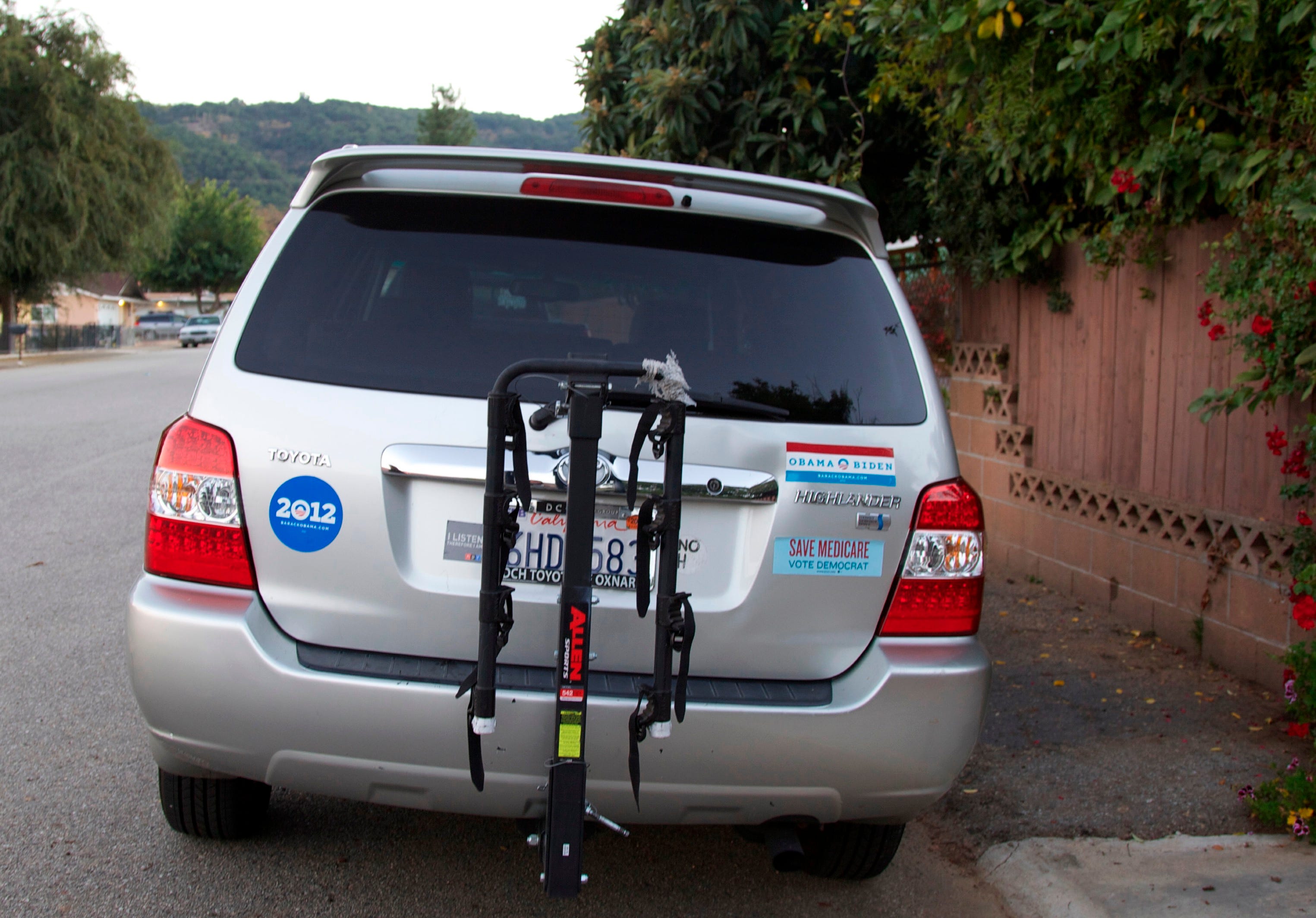
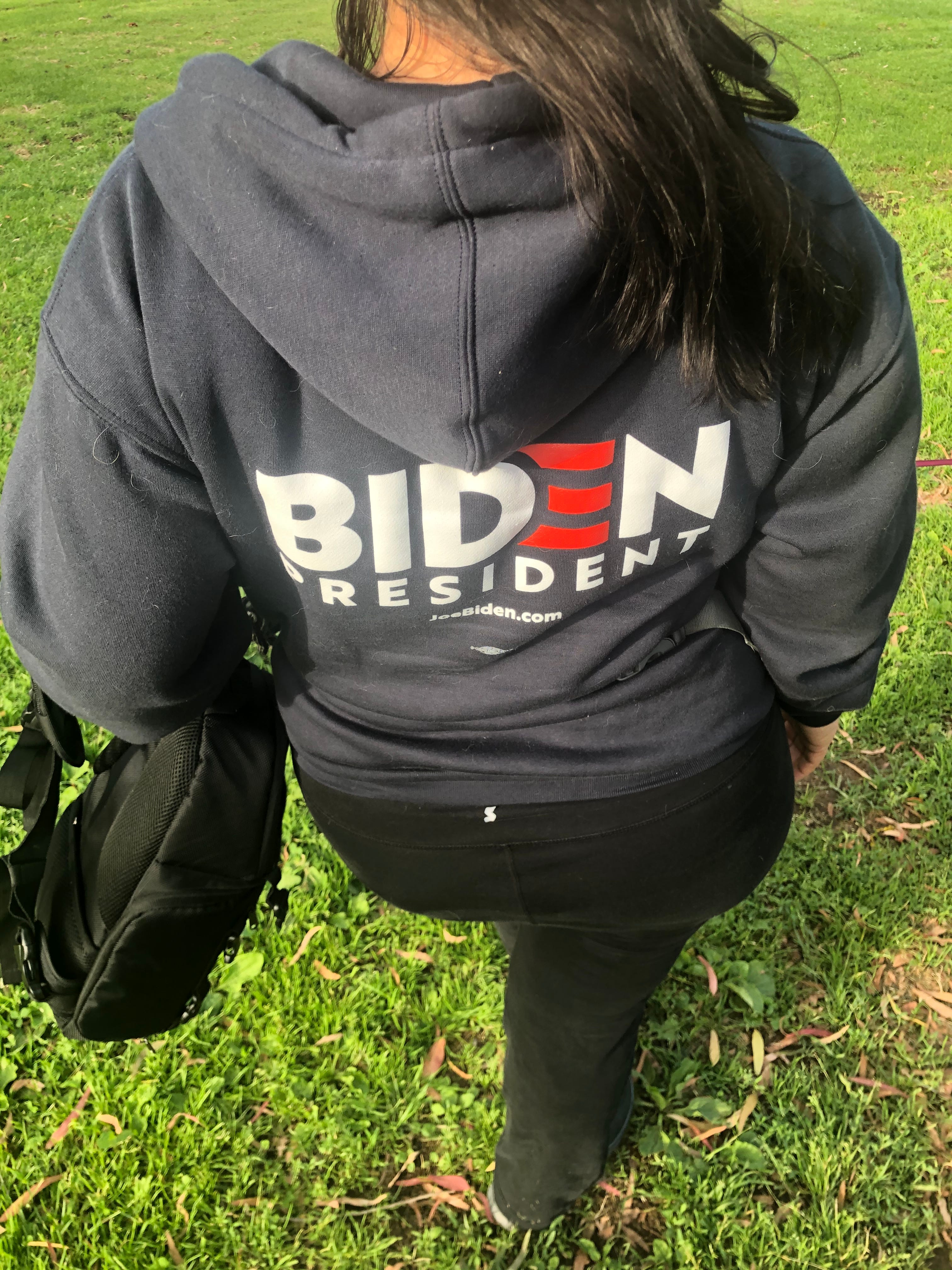
I was all in for Obama, Hillary Clinton, and Joe Biden. I was so loyal a supporter that I was invited to an early Biden fundraiser in May of 2019. I watched him speak with tears in my eyes. He will save us, I thought.
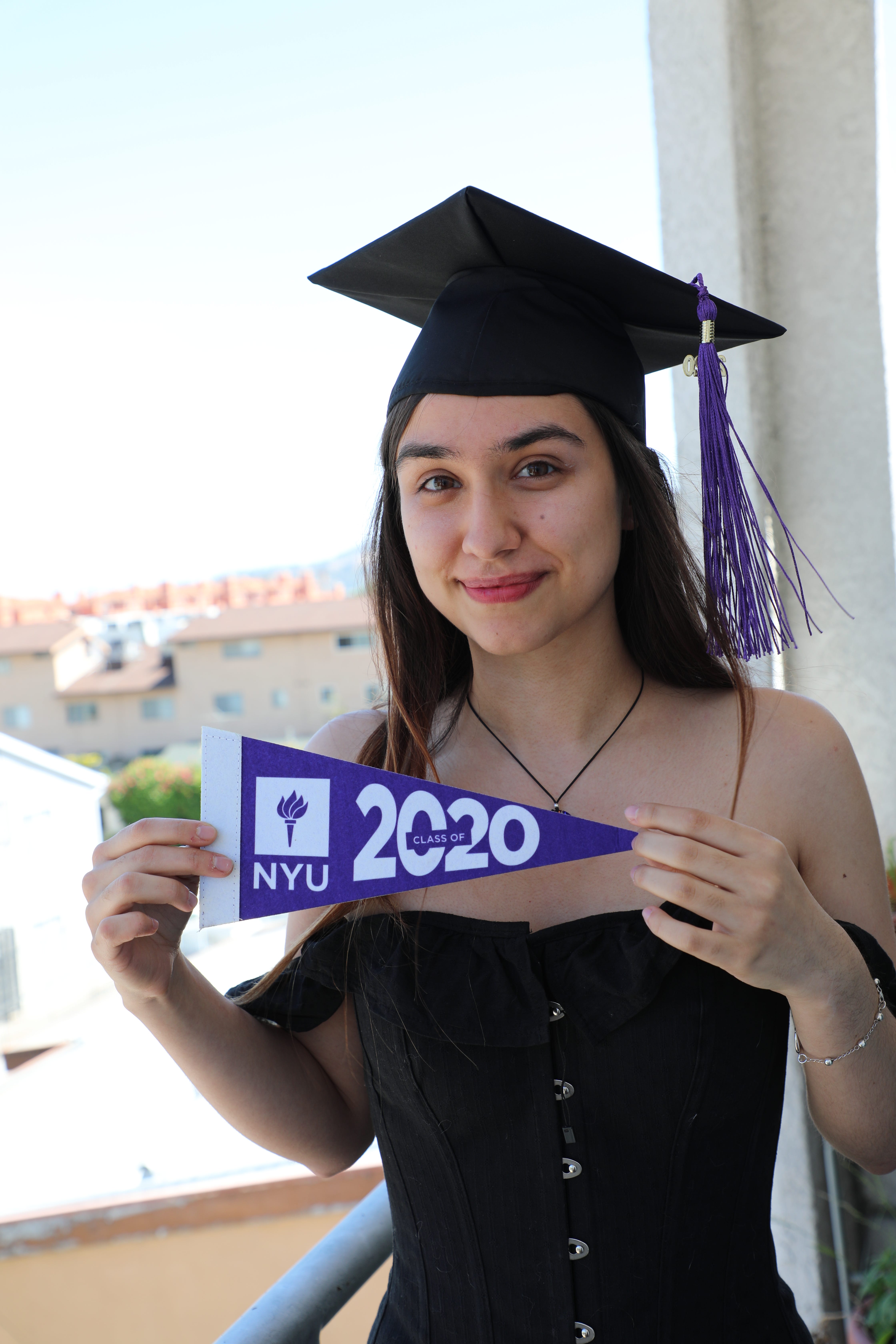
One year later, however, COVID hit. My daughter had to leave her senior year of college and have her graduation on my balcony. We were sewing our own masks and making our own hand sanitizer. It was a whole-of-society effort to deal with this once-in-a-generation pandemic.
But by the end of May, the George Floyd video whipped around the world, and before long, the whole of society's effort had to shift to racial injustice as millions poured into the streets.
What I saw unfold that year, the lies that were told, the gaslighting, the lurching from one narrative to the other, and all of the obedient robots going along with it, in full mass formation, was too much, even for me. We watched them lie - the experts, the journalists, the celebrities, the Democrats.


I kept trying to scream from the rooftops that we would lose the 2020 election if the violent protests didn’t stop. What I didn’t know, what I would find out by the end of the election, was that it didn’t matter. They would bend the media narrative to pretend there were no violent protests. It all worked cleanly and smoothly. No one was even allowed to question it.
Trump was campaigning hard, doing multiple rallies a day, and it seemed to me he was making headway and changing minds. We know this because he won Florida, Ohio, and Iowa. Only once in history has anyone won those three states and still lost: The 1960 election.
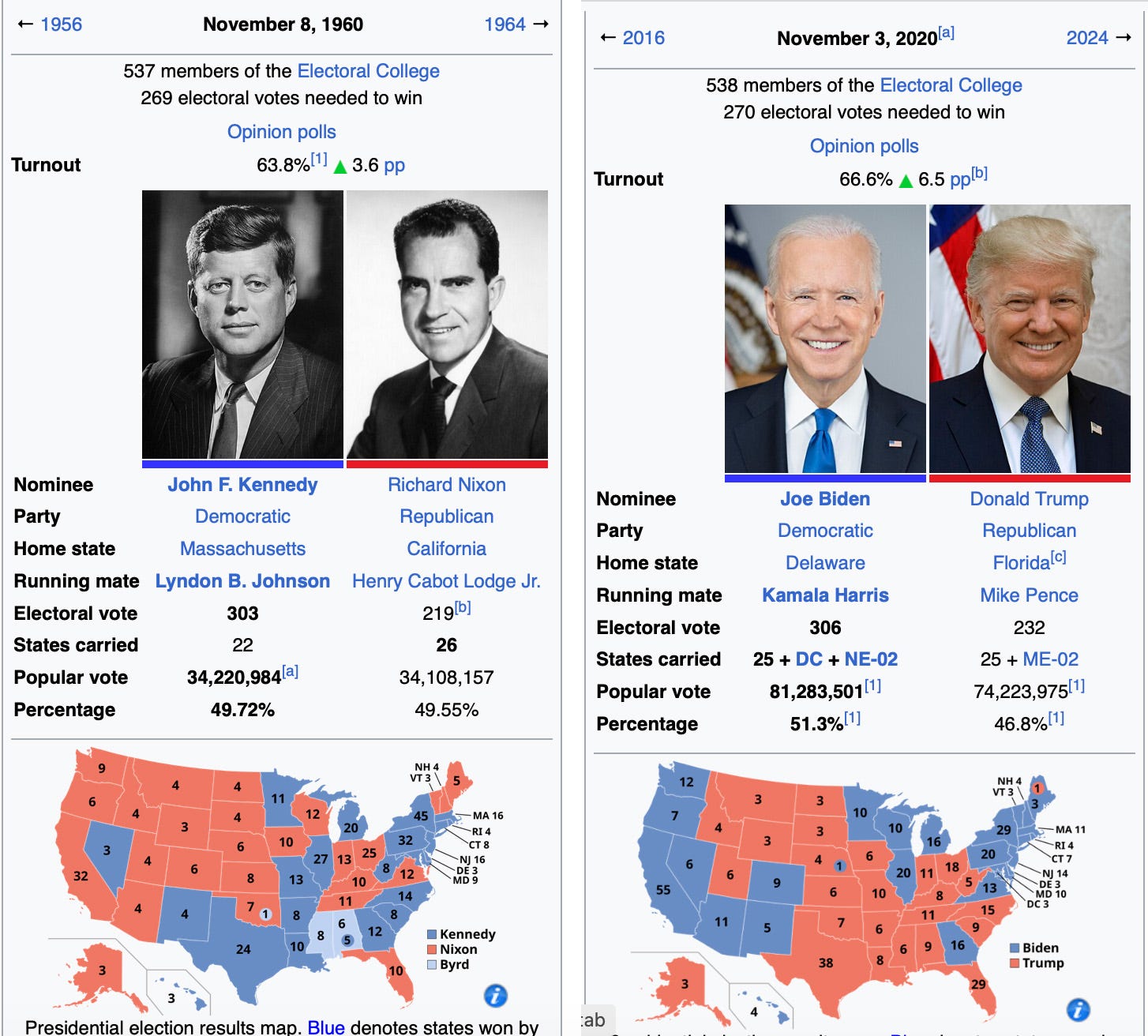
The difference in votes between Kennedy and Nixon proves how close the election was. But it never made sense to me that Biden would win by such a large margin and also lose Ohio, Iowa, and Florida. Unless, of course, they’d built a system that was too big to fail and had collected enough ballots long before Election Day.
The FBI, still working under Trump, had helped the Democrats by suppressing the Hunter Biden laptop via social media. COVID gave Biden the excuse to hide in the basement and not campaign. A “whole of society” effort to purge a once-in-a-generation threat seemed to justify everything they did, as we know from the confession in TIME Magazine. Our elections, it seemed, were too risky to leave up to the people.
This system, this utopia we built, believed itself to be more powerful than our democracy, more powerful than our elections. I couldn’t go along with that, just as I couldn’t go along with everything that came after, as our utopia devolved into a totalitarian dystopia.
The Information State
Sometimes, during those dark nights of the soul, I wonder, did I do the right thing? Did what I thought happened really happen? No one in the mainstream media or culture has ever acknowledged any of it. They don’t want to admit it or talk about it. Their war on Trump simply rages on, and they hope all of us will one day get with the program.
But for me, there is still that untold story, a story I need to be told so that everyone on the Left - my friends and family and all of Hollywood and much of our legacy media understands what happened in the last ten years. Why are we living like this, with one half of the country marching by the millions to protest a president who defeated them not once but twice? Their hatred and shunning of half the country is still justified and accepted. Why?
Now, thanks to Jacob Siegel, we don’t have to wonder. He’s written it all down, the whole ugly tale, in this essential text, The Information State: Politics in the Age of Total Control. There is nothing they can do about it now. It will set the record straight, at long last.

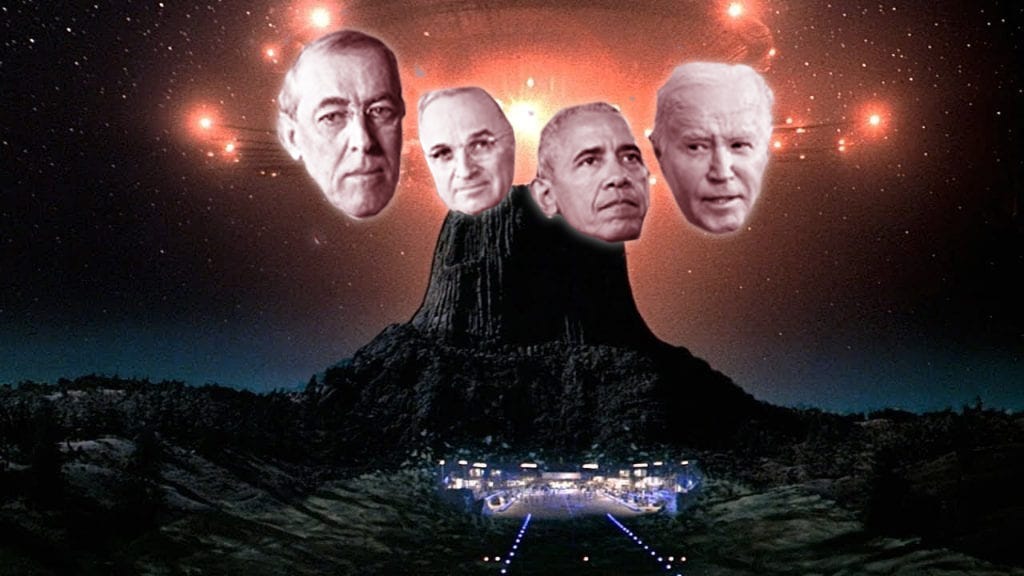
The Information State starts with Woodrow Wilson’s Great War crackdown on speech, and moves through World War II, Harry Truman and the Cold War, up to 9/11 and the expansion of the surveillance state. But it was the Obama administration that took it much further, beyond mere surveillance. He used information to change hearts and minds and to create a utopian society, not unlike those of the Soviet Union or China.
As Siegel writes:
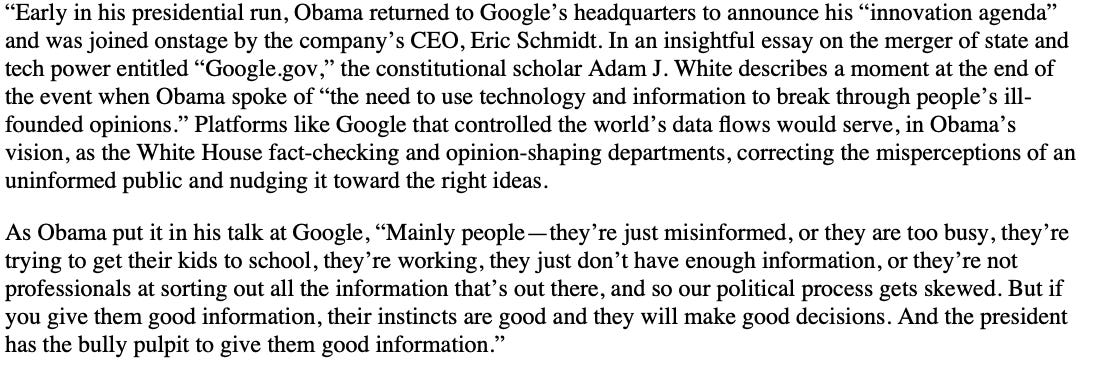
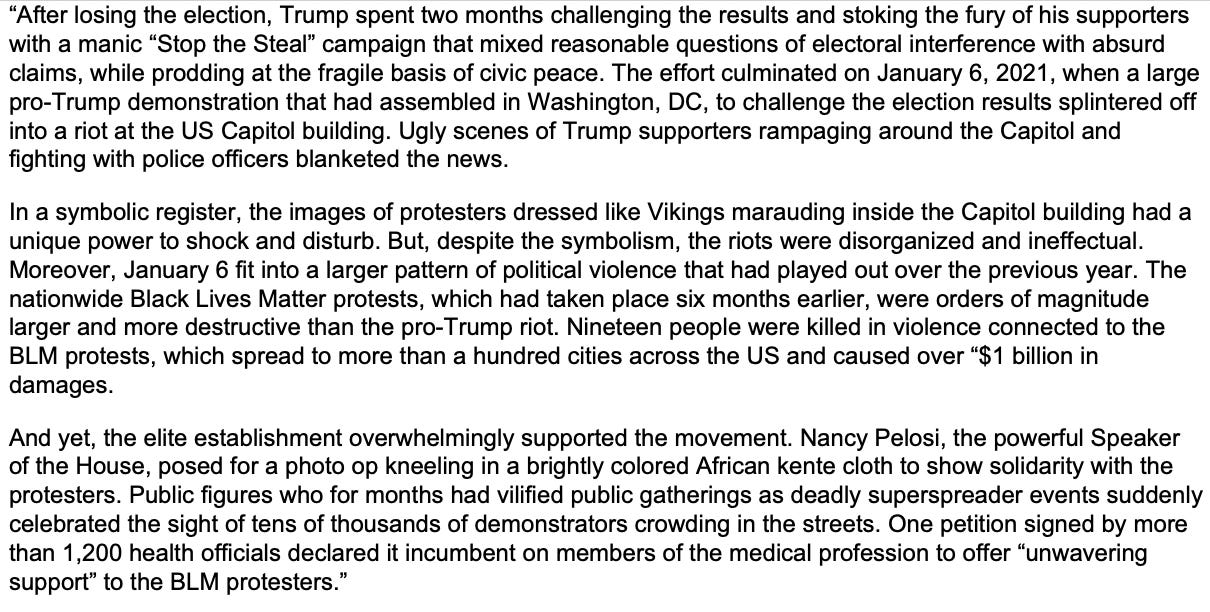
How the protests and riots over the Summer in 2020, versus those on January 6th, were treated so differently by our government remains one of the clearest examples of the kind of two-tiered society we were living under before Elon Musk bought Twitter and Donald Trump won again.
The BLM riots attacked working-class people, so they didn’t matter, but January 6th attacked the powerful, and that, to them, meant war.
Siegel writes:
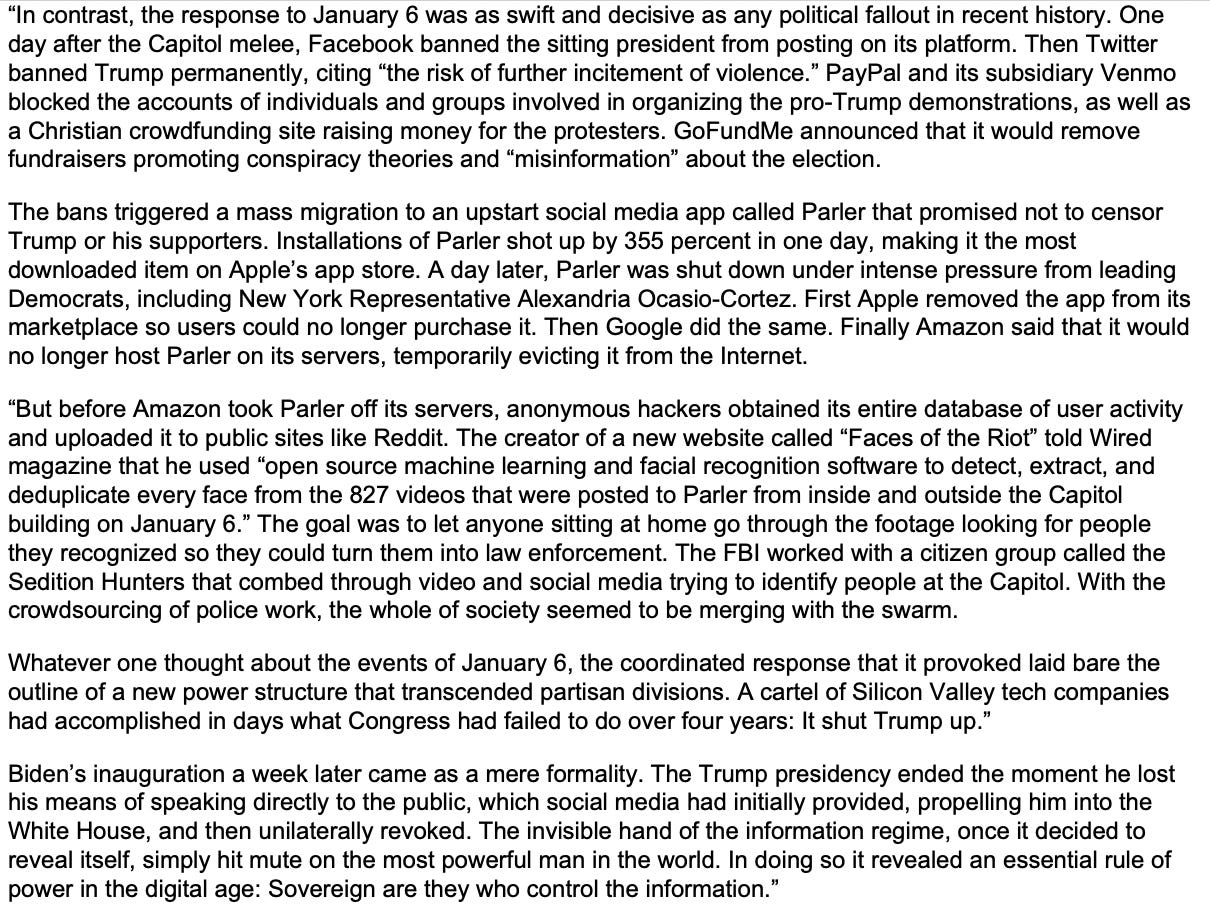
“Truth Held Forth and Maintained.”
The scandal of how 20 people were hanged as witches in Salem would have been long forgotten, were it not for a cantankerous Quaker named Thomas Maule, who made the brave choice to expose the scandal in a pamphlet he called Truth Held Forth and Maintained.

In cool and cutting sarcasm, he wrote that God would condemn the witch trial judges. He famously stated, “[F]or it were better that one hundred Witches should live, than that one person be put to death for a Witch, which is not a Witch.”
Maule’s pamphlet was banned, and he was thrown in jail for “blasphemy and slander.” He would eventually get a trial, and the jury, exhausted and demoralized by the events of that winter, ruled in his favor, handing him a landmark win that would be among the cases that inspired the First Amendment.
Jacob Siegel won’t be jailed for blasphemy. Those named in the book will either ignore it outright or attempt to discredit it. As of today, there are no reviews in the New York Times or the Washington Post.
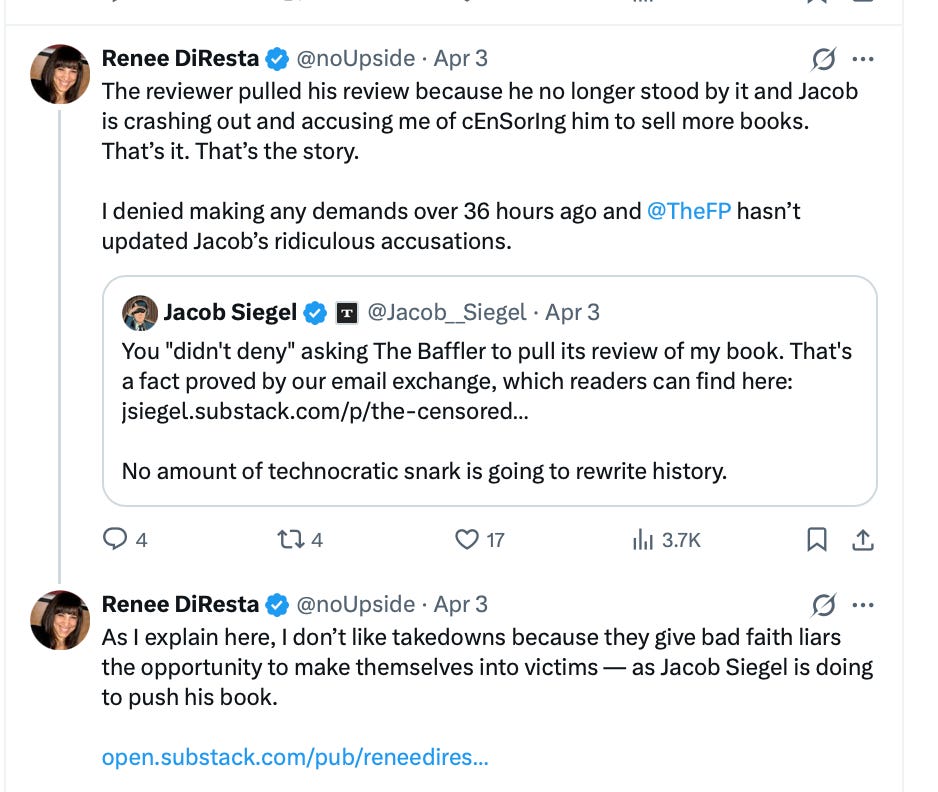
As if out of a chapter in his own book, Renée DiResta objected to how she was portrayed and wrote a letter of complaint to the website Baffler, which then pulled the review. Siegel and DiResta publicly debated whether it counted as censorship. But who needs censorship when you have total societal control? At least among the university-educated ruling class.
DiResta’s bio on Twitter reads:
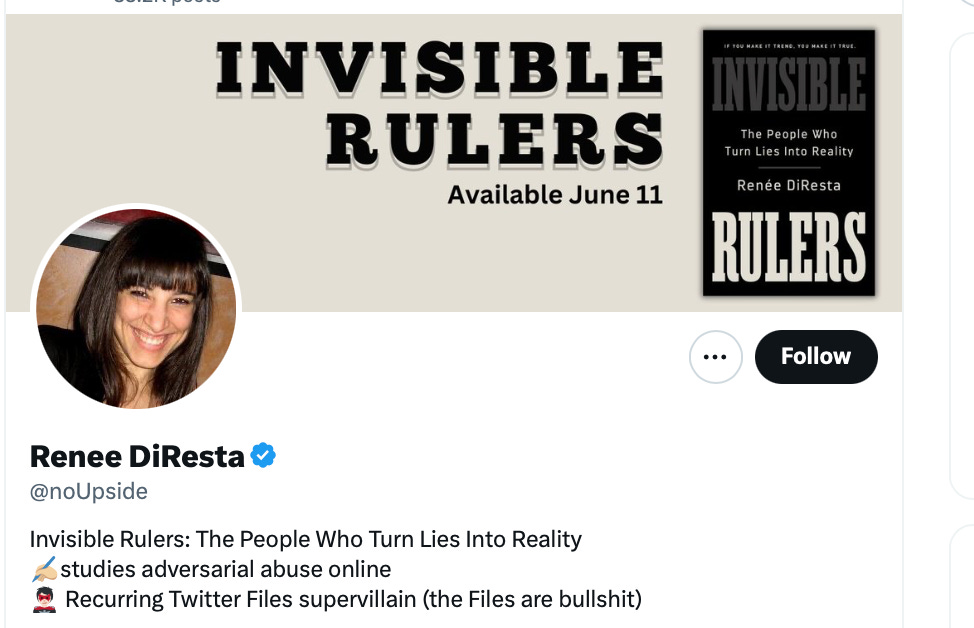
DiResta and the machine she works for have rigged the game in their favor. No major media outlets will ever call them out. Hollywood won’t write any controversial screenplays about them. Late night comediens will never mock them, and they will always be treated gently, with soft cotton gloves, lest anyone leave a mark.
Into the Unknown
Jacob Siegel’s The Information State does not paint an optimistic vision for the future. It ends with a question mark. Who will control this vast leviathan of data and human behavior, that now includes unstoppable AI? And how will we survive it?
What will these same people who took complete control of society, of thought and speech, do if they take back power? I think we can probably guess. If they’ve never admitted it, never atoned for any of it, then we can expect it will come roaring back, and this time, they won’t bother trying to hide it.
My advice? Log off. Migrate back to the real world. Look at the sky at twilight. Dig your toes into the sand. Build a fire in the woods. Look people in the eye. Attend a poetry reading. Go to a coffee shop. Meet people in the real world and leave the internet and the Information State far behind.
It’s probably too late for me. I’m a lifer. I know that. But I’m also a cautionary tale. This is what happens when you spend 30 years of your life in the virtual world. But if I can find my way out, then anyone can.
//