

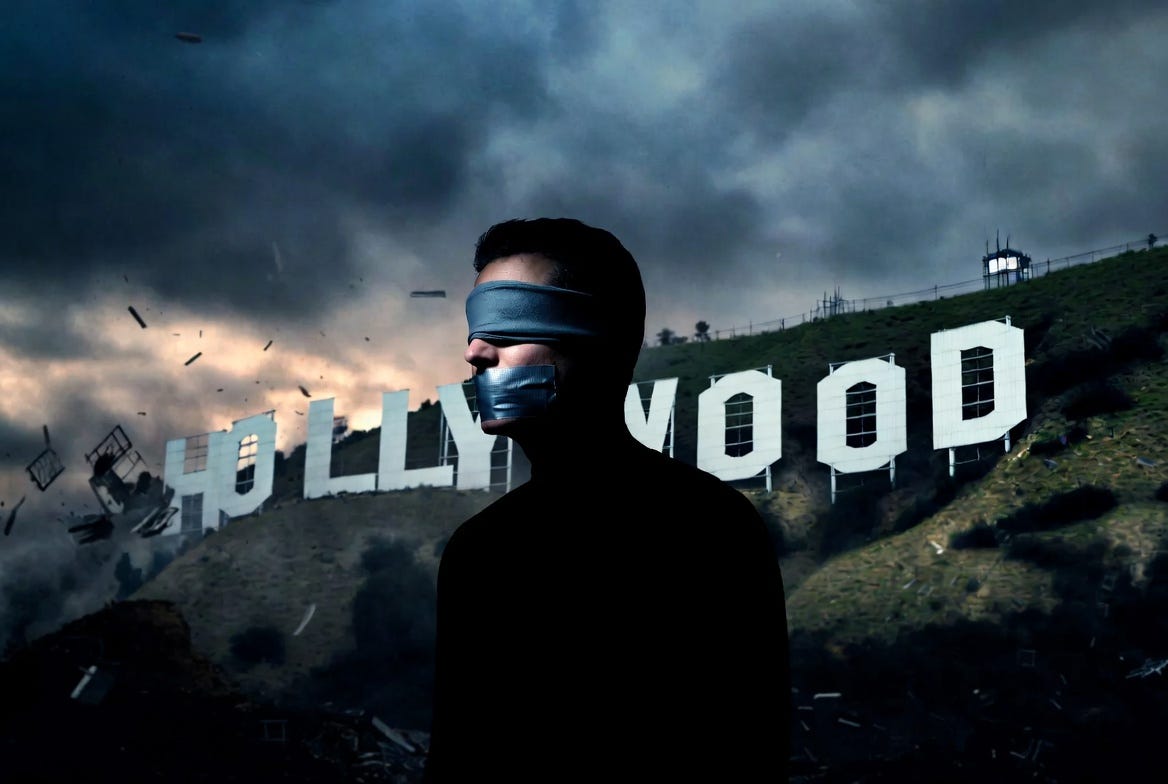
Hollywood is not trying to stop a monopoly by blocking the Paramount Skydance merger with Warner Bros. It’s trying to protect one.
If a monopoly means near-complete control over what gets made, promoted, and rewarded, then much of Hollywood and the cultural institutions around it operate under the ideological consensus of the Left and the Democratic Party.
Why do the Obamas have a long-running production deal at Netflix? Why do the Emmys consistently elevate late-night hosts whose politics align with that consensus? Jimmy Kimmel, John Oliver, Stephen Colbert, Jon Stewart?
Do you think they’d ever nominate Greg Gutfeld, whose show often tops them all in ratings? If that isn’t an ideological monopoly, I don’t know what is.
Why did major awards shows stay silent on Charlie Kirk? Why did so many artists cancel Kennedy Center appearances after its Trump-era changes, and why did multiple acts drop out of America 250 events?
David Ellison and Paramount Skydance are attempting something brave and unprecedented: an outside challenge to that consensus. Their roughly $110 billion bid for Warner Bros. Discovery would give them control of a major studio, HBO/Max, CNN, and a large portfolio of cable and streaming assets.
While there has been some resistance to the biggest mergers in recent history, we’ve never seen anything like #blockthemerger. Meet the new resistance, same as the old resistance.
12 state attorneys general, including California, have sued to block the deal. The Writers Guild of America has filed its own antitrust lawsuit. SAG-AFTRA has publicly opposed the merger, though it has not joined the litigation.
Opposition also includes the Future Film Coalition (which leads the #BlockTheMerger campaign), Democracy Defenders Fund, Committee for the First Amendment, Free Press, the International Documentary Association, and the American Economic Liberties Project, among others.
More than 5,600 industry figures have signed an open letter against the deal, including Mark Ruffalo, Jane Fonda, Javier Bardem, Elliot Page, Emma Thompson, Ben Stiller, and Cynthia Nixon.
Paramount Skydance has, for now, delayed closing. Can they hold the line under this unprecedented pressure campaign? Hope springs eternal.
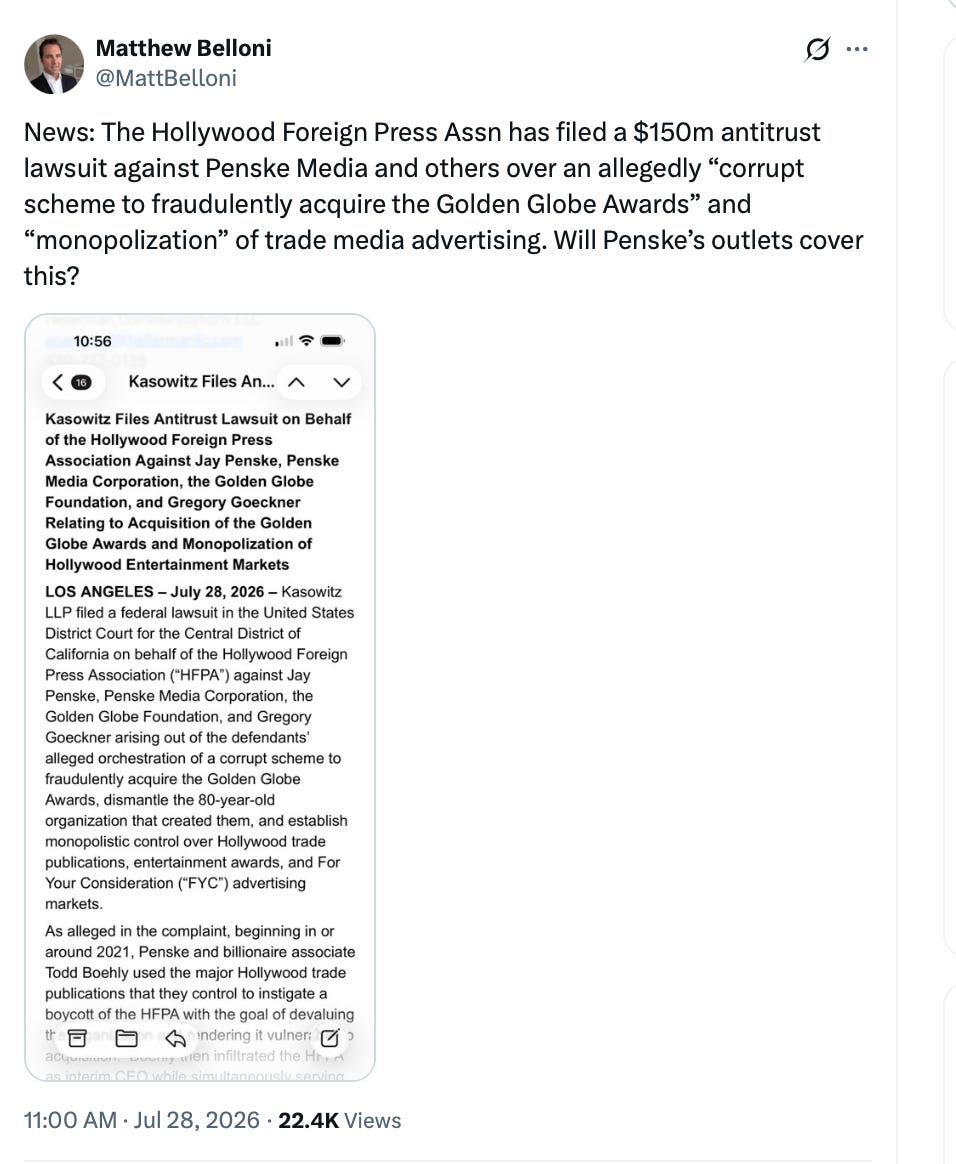
But you won’t read about that point of view in any of the trades. They’re a monopoly, too. Most of them are owned by the same entity, Penske Eldridge. Just today, it was announced that the Hollywood Foreign Press, the former owners of the Golden Globes, are suing Jay Penske for $150 million. They are claiming Penske orchestrated their downfall so he could buy the Golden Globes.

Jay Penske already owns Deadline, The Hollywood Reporter, Variety, Indiewire, Gold Derby predicting site, Rolling Stone, a virtual monopoly on the awards race from soup to nuts. Gold Derby shapes the nominees, the trades take ads from the studios and the Golden Globes hand out the awards.
But wouldn’t you know, when Rebecca Keegan wrote a hit piece on me, she did so in the Hollywood Reporter, owned by Penske Eldridge. I was a vocal and prominent critic of Penske’s growing monopolistic power on the awards race and one of the few willing to speak out.
With one hit piece, the Penske company took out both a competitor for ad money and a pesky nuisance for the brand. That is what you call a monopoly.
A Climate of Fear and A Culture of Silence
I found out firsthand how monopolies work in Hollywood when I was canceled in 2024. The day a Hollywood Reporter story labeled me a “MAGA darling,” one studio pulled its ads from my site that day. The last thing they wanted was to be associated with an accused and condemned witch.
It was shocking how many of them fell in line in robotic fashion, gripped with fear. The response was swift and uniform. Every writer on my site left to protect their reputations. Friends of fifteen years ended the friendship. My Oscars ticket was revoked. Jane Fonda’s Women’s Media Center fired me from their annual Oscars report. Screening and party invitations dried up. I was benched on Gold Derby.
Worst of all, the lucrative studio ad buys for the Oscars and Emmys vanished. As it all collapsed, I remembered in 2012, an advertising strategist telling me I could be making far more money if I sold the site better. “You have no baggage to speak of,” she’d said.
That was true then. I was one of the few independent Oscar sites left, and still am, known around town for being honest to a fault. I stayed independent even as the ad money made life more comfortable for me and my daughter than it had ever been.
There was never any question why my career ended in Hollywood: I had been outed as a Trump voter. I was on the wrong side of Hollywood’s progressive orthodoxy, and that meant I was finished.
How it started…
I started Oscarwatch.com as a single mom with a one-year-old baby living in a studio guest house in Van Nuys, California, in 1999. I was an early web pioneer with a 1200-baud modem and a really good idea.

I was already catching the attention of publicists and rocking the boat, as all of us amateurs did back then. We were moving fast and breaking things. Traditional media was not ready. The studios weren’t either. They were used to having a monopoly on Oscar FYC ads in Variety and the Hollywood Reporter, their bread and butter. Until the blogs came along.
By 2006, I was starting to make money because my little site had birthed a big bang of other Oscar sites, and by then even the New York Times had an Oscar blogger, the late great David Carr, who called himself the Carpetbagger.

David Carr became a mentor of sorts and encouraged me to sell ads for myself, rather than piggyback off bigger sites. I was working three jobs by then: as a horoscope writer under a pseudonym (Laura Wilde), a janitor working my dad’s routes because he was a good guy and knew I needed the money, and a freelance film critic.
Right around then, the Academy of Motion Picture Arts and Sciences sued me for trademark infringement, and my site was renamed AwardsDaily.com. Now I was cleared to start making real money.
David Carr was horrified that I was working as a janitor while the trades were raking in millions on Oscar ads and encouraged me to start sending out RFPs. But I didn’t have to, because before long the studios were sending them to me.
My site became so influential that I never really had to pitch to them. They all wanted real estate on my site. Who could ever have imagined that? Certainly not me, someone who got online in 1994 back when no one thought you could make money on the internet.
One of the first studios that bought ads was Fox Searchlight, an awards subsidiary of Fox. I called it Big Fox and Little Fox, and both advertised on my site. When I got my first $15,000 just to run ads, I was stunned. That was more money than I had ever seen on a check. I was just kind of faking it, pretending I knew what I was doing, but I really didn’t.
Of course, it was also about promoting films the studio wanted to place in the Oscar race, and that’s still what it’s about. It’s not exactly pay-to-play, but most of the bloggers making money in the Oscar game are grateful and help keep the advertisers’ movies prominent. I did too.
I barely noticed in 2019 when Disney bought Fox for $71 billion. The Writers Guild objected to the merger, just as they have to the Paramount Skydance merger with Warner Bros., but there was nowhere near the same amount of public outcry.
Trump praised the Disney/Fox merger after having attempted to stop the 2018 merger of AT&T and Time Warner, leading to a trial, but the judge ruled against the Trump administration, and the deal went through. Again, no major public outcry.
At some point after 2020, I’d noticed that Disney had stopped advertising on my site. I wrote it off as their shying away from my comments on “gender affirming care” for kids. I’ll never know exactly why, but all I do know is that once the merger went through, Fox and Fox Searchlight also stopped advertising.
The Paramount/Skydance merger with Warner Bros. is significantly higher and covers more territory than any of the major corporate mergers we’ve seen as Hollywood reshuffles the deck amid the shift to streaming.
Warner Bros. was selling. The only question was whether Netflix or Paramount Skydance would buy it. Both deals would have had the blessing of the Trump administration.
But because it’s David Ellison and the team that bought CBS, and because Trump is an ally, the Democrats and the Left have turned #BlockTheMerger into another No Kings protest or battle for the “resistance.”
After the story about me broke in the Hollywood Reporter, Netflix also stopped advertising. No other studio except Focus Features, an adjunct of Universal, had the courage to run ads on my site. I was now officially blacklisted. Emails to the various studio reps went unanswered.
This past year, Paramount bought a modest ad package on my site for the Emmys to celebrate the success of Landman and The Madison. I felt lucky to get it, and it was a sign, at least to me, that Paramount, like Focus Features, was brave enough to take a chance on someone deemed too toxic by the industry.
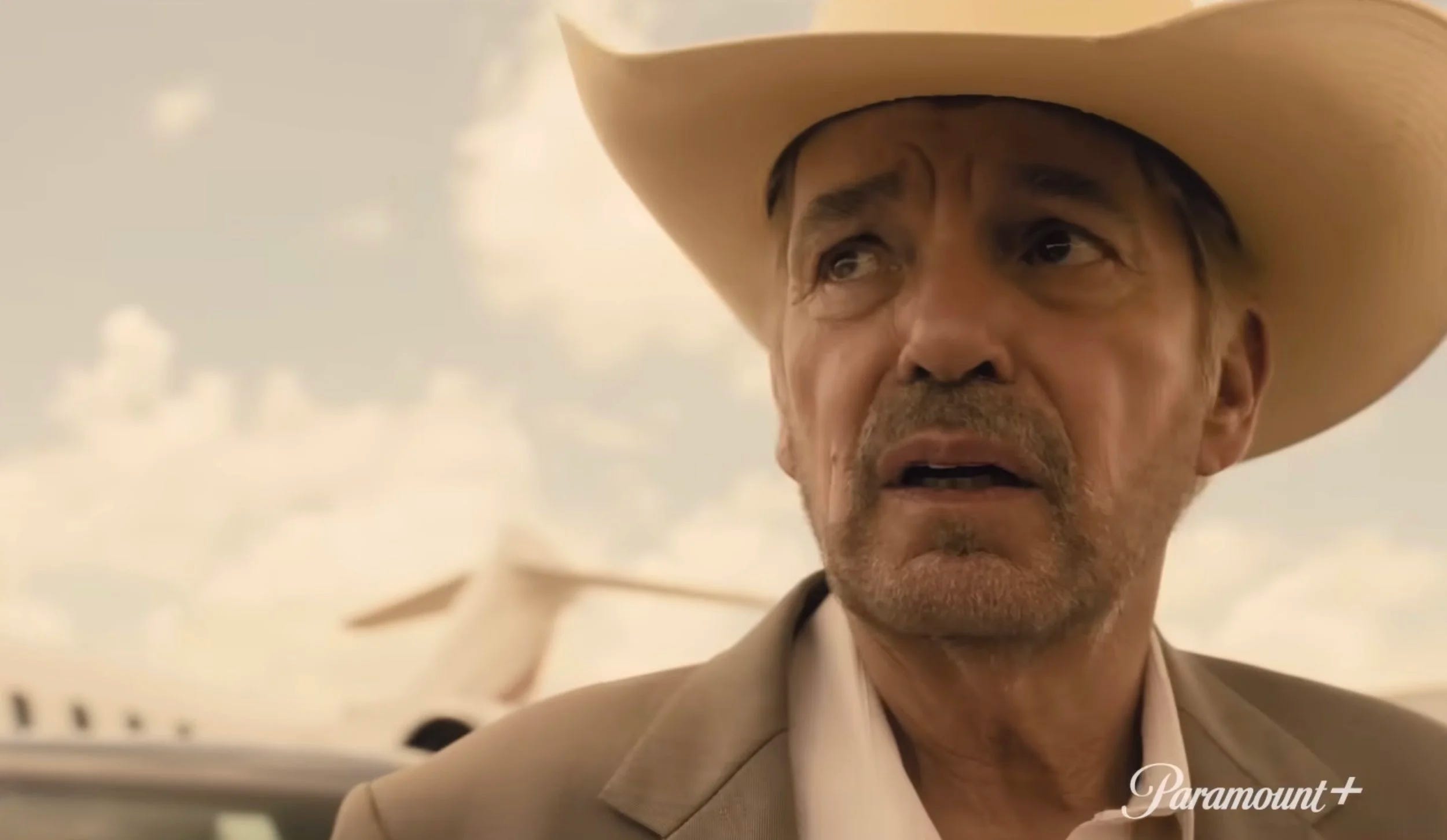
Landman, Taylor Sheridan’s Billy Bob Thornton drama, had become one of Paramount+’s biggest hits: its first season averaged 15.8 million viewers in Nielsen’s cross-platform ratings and ranked among the top 10 series of the 2024-25 season.
Season 2 opened to a Paramount+ record 9.2 million views in its first few days and continued to dominate the streaming charts, at one point leading all multiplatform viewing with more than 14 million.
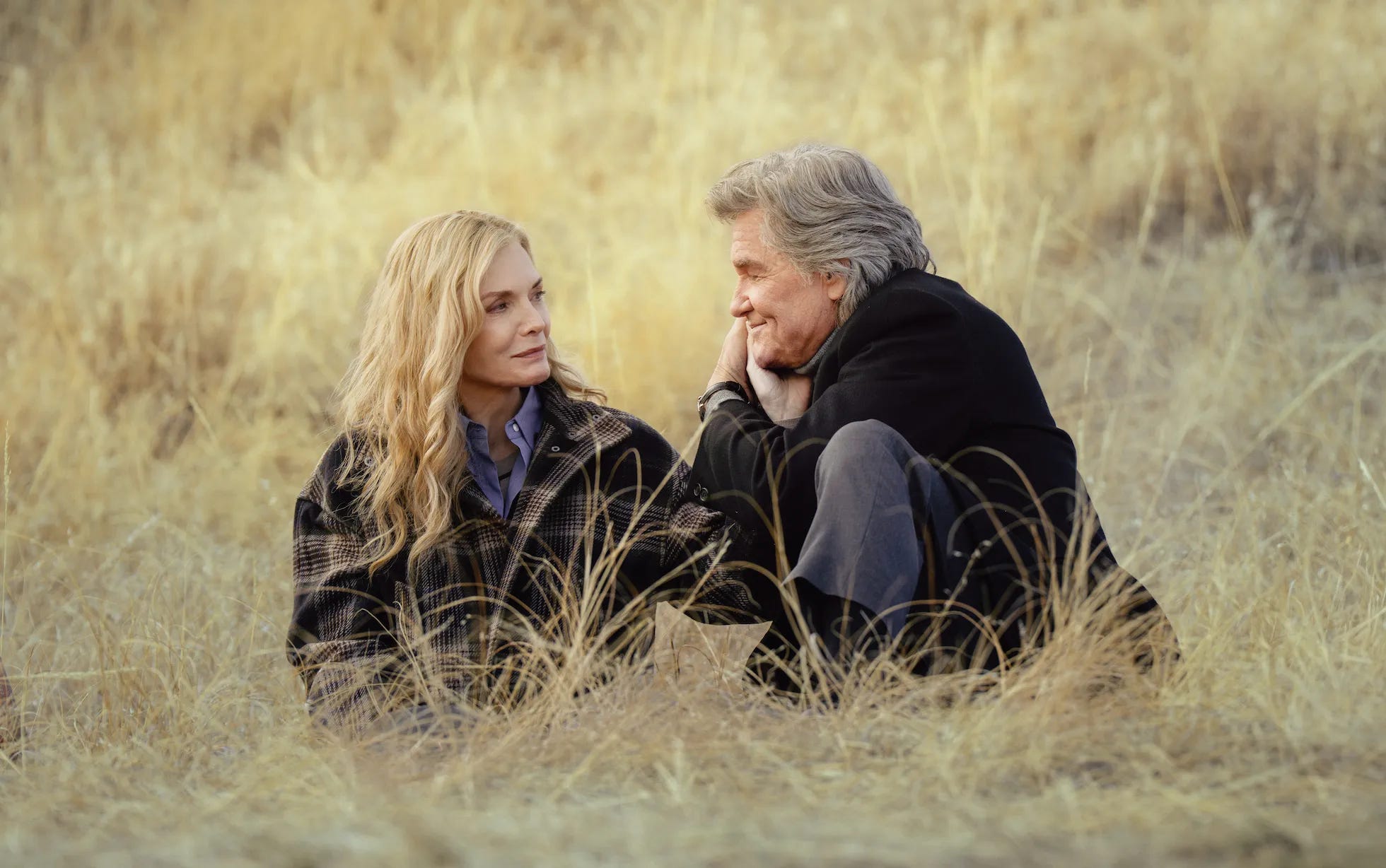
The Madison, starring Michelle Pfeiffer, launched as Sheridan’s biggest series debut yet, drawing 8 million views in its first 10 days.
But unfortunately, #blockthemerger had bled into the awards ecosystem, which remains a closed loop.
Sure enough, when the Emmy nominations arrived, the Paramount shows were completely blanked—even Billy Bob Thornton in Landman and Michelle Pfeiffer in The Madison. Kathy Bates was similarly overlooked for Matlock.
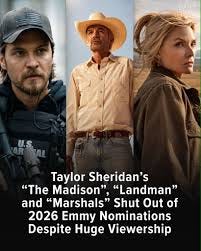
If Gold Derby shapes the Emmy nominations, and they do, they have to similarly play ball by blacklisting all Paramount Plus’s most popular shows, proving to American audiences that the industry does not care about what they want or what they watch.
Sheridan has transformed much of the television landscape, thanks to Paramount Plus. If Paramount buys Warner Bros., they won’t be creating a monopoly but breaking one up.
The Death Rattle
I know I should walk away from this industry and give up the site that took me 26 years to build. But I just can’t do that. I can’t let them win.
Now that I’ve walked in the shoes of the other half of the country, I can clearly see why Hollywood’s empire is collapsing. If ratings and box office don’t matter, neither do audiences.
None of this is about artistic freedom or making better movies or television shows. This is the Left flexing its muscle in an attempt to keep all of Hollywood to itself, to push its ideology on the people, to convert them, to indoctrinate them, to “correct them,” everything but entertaining them.
Most of all, though, it is about one man: Donald Trump and their failure to stop him, destroy him, kill him, or exile him and his supporters. This is one of the most exciting times to be living through in American history, but you’d never know it by the movies and TV shows Hollywood pumps out.
Their monoculture, their one-sided point of view, has choked the life out of Hollywood. If they could make fun of themselves, if they could humanize their fellow Americans, they might be able to tell stories that resonate with everyone. Maybe, just maybe, they would breathe new life into a decaying organism.
But they can’t risk it. Like the Democrats who don’t trust the people with elections, Hollywood doesn’t trust them with the culture.
Elon Musk spent $44 billion to take Twitter out of the hands of its previous gatekeepers. Ellison is now trying to pry open a crack in the thick shell of Hollywood’s product and return more of it to market forces and all of those people Hollywood left behind.
//


